Think less, we’ve got you covered !
Artificial intelligence can expand our capabilities. It’s up to us to decide what we want to do with it. What if the danger isn’t that AI will surpass us, but that it will relieve us of the need to surpass ourselves? We ask it to search, to write, to compare. There is nothing fundamentally wrong with this: a tool can free us from a constraint, shed light on a difficulty, and allow us to go further. We don’t have to cling to our limitations to preserve our humanity. But increasing our capabilities isn’t enough to give direction to our lives. We can produce more without having a clearer sense of what we mean. We can have a thousand options without understanding which one deserves our commitment. We can get an immediate answer to a question that we should have let simmer a while longer.
The question then becomes this: To what extent does assistance make us more capable, and at what point does it spare us the effort of becoming so? This distinction does not pit virtuous work against suspicious ease. Some difficulties wear us out unnecessarily. Others transform us. Searching for the right words can bring a thought to light; confronting an objection can shift a conviction; overcoming hesitation can teach us what we truly value. By constantly receiving ideas that have already been picked, we might end up with a magnificent basket and a neglected garden. Skipping these steps, therefore, does not always save time. Sometimes it means giving up what they would have made of us. Perhaps letting go begins here: not when we receive help, but when we can no longer distinguish between what relieves us and what robs us of our own experience.
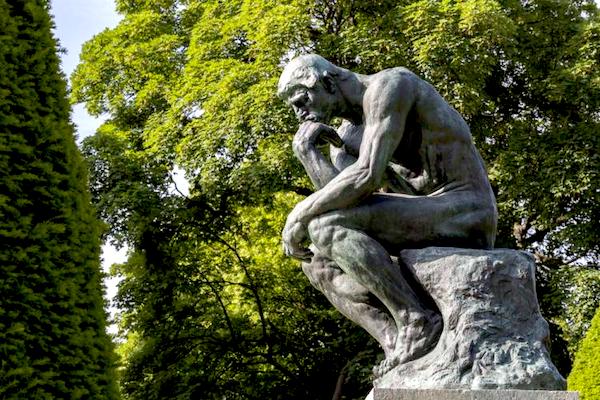
©Agence photographique du musée Rodin. Jérôme Manoukian
Yesterday, our attention. Tomorrow, our initiative?
With AI agents, the scope of assistance is changing. OpenAI presents ChatGPT Work as an agent capable of carrying out projects within connected applications and files, under the user’s control. Without prejudging the reliability of this commercial promise, the announced shift is clear: it’s no longer just about receiving an answer, but about entrusting the execution of a project.
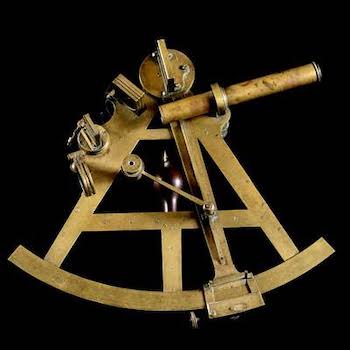
Musées de Langres
Delegating in this way can save us time and open up new possibilities. But it also shifts the timing and manner of our involvement.
When we delegate a task, we can retain control over its purpose. When we accept a predefined goal, pre-selected criteria, and a predetermined outcome, our role becomes less obvious.
We had asked her for glasses to see better, a compass to find our way, and a pen to express ourselves more clearly. Now here she is, choosing the scenery, setting the destination, and writing down our impressions of the trip. The service is impeccable; our presence becomes almost an administrative complication.
This is not an inevitable fate, but a shift that must be acknowledged. Our initiative has not necessarily disappeared. However, we must still be able to exercise it in ways other than simply giving our consent.
The quality of assistance therefore also depends on the room it leaves for our own judgment: can we reevaluate the goal, challenge the method, or halt the action? Or are we primarily expected to approve a course of action that has become difficult to scrutinize?
A delegation remains ours as long as we can still discuss its rationale, modify its conditions, and, if necessary, renounce it.
But we must still feel the desire to do so. For relinquishing power does not always stem from a power being taken away from us; it can begin with a power that we are relieved to no longer exercise. Everything is in place, everything seems coherent, and taking back control would require an effort.
Comfort sometimes takes the form of renunciation
In Schopenhauer as Educator, Nietzsche writes: “There is only one path in the world that no one but you can follow.” He is obviously not talking about artificial intelligence. But this statement helps us draw a distinction: we can receive advice and make use of tools without being able to entirely delegate the task of shaping our own lives. Becoming oneself does not mean finding a ready-made identity, but rather taking part in what transforms us. It is therefore not a matter of making solitude an ideal. We also shape ourselves through the encounters, works, and ideas we encounter. An external suggestion can reveal a possibility we would not have discovered on our own. But it does not become ours simply because it appeals to us immediately. We must still test it: understand what it entails, recognize what it rules out, and decide whether we want to accept the consequences.
AI can support this work. The risk arises when the convenience of the answer systematically spares us from this scrutiny. We then no longer choose what seems right to us after careful consideration, but rather what presents the least resistance. Convenience becomes a gentle slope. Nothing forces us down it abruptly; that, in fact, is its true genius. We slide down almost without realizing it, happy that the steps have finally been removed.
A Presence That Is Available, a Different Kind of Encounter
What applies to our decisions is also worth examining in our relationships: Does a presence help us connect with others, or does it gradually spare us from having to encounter them?
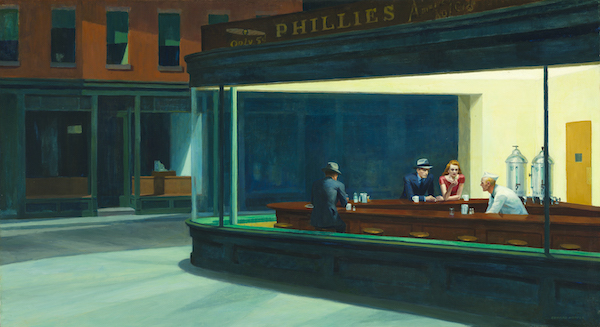
Huile sur toile, 84,1 cm / 152,4cm. Art Institute of Chicago
Research presented by the American Psychological Association points to relief from loneliness, but also to risks of addiction and isolation depending on how these technologies are used. It would therefore be too simplistic to contrast a human relationship—which is necessarily enriching—with an artificial conversation—which is necessarily impoverishing. The comfort we receive should not be dismissed. The question is what role it ultimately comes to play.
Does this exchange help us understand an emotion, prepare for a difficult conversation, or make us more open to others? Or do we come to prefer it because it spares us from their disagreements, limitations, and demands? A human relationship transforms us not only because it supports us. It can also challenge us because it does not revolve entirely around us. The other person is not a mirror whose lighting we’ve improved. Sometimes they show us precisely what we’d taken care to leave out of the picture.
The point is not to seek out discomfort for its own sake. It is to avoid making the absence of discomfort the measure of every relationship. By wanting a presence that is always tailored to our expectations, we risk forgetting what makes an encounter unique: someone who isn’t quite like us, and whose needs are not the same as ours.
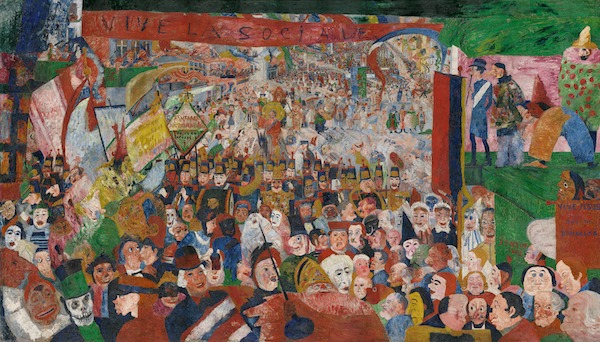
. Paul Getty Museum (USA).
A form of intimacy whose conditions are beyond our control
Added to this difference is a fragility: the conditions of this interaction depend on a service over which we have no control—neither its rules nor its continuity.
A systematic review from September 2026 notes that some users experience distress associated with the modification or disappearance of artificial companions; its conclusions remain preliminary.
Emotional investment and decision-making power are therefore not necessarily aligned. A person may place great importance on these interactions, while the framework within which they occur depends on technical and commercial choices in which the person has little say. We can entrust our secrets to it as if it were our own private room. But the keys remain at the front desk. This disconnect prompts us to distinguish between the perceived closeness and the actual control over the conditions of the interaction. The more a tool enters our private sphere, the more understandable its limitations should be. Trust should not be based on their obscuring.
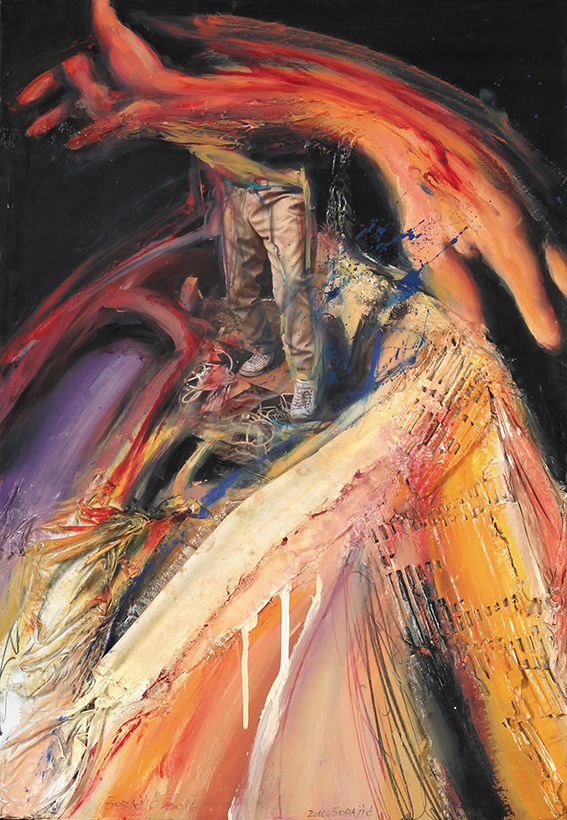
Huile sur toile. 64,5cm/44,5cm
We are not devices to be upgraded
After examining what we delegate, we must distinguish between what we may lose in practical terms and what we do not lose in terms of dignity.
Even when a machine performs a task faster than we do, that does not make our existence any less dignified, any less rich, or any less necessary. We do not have to win a performance competition to justify our place.
A human being is not a machine from which we would expect, every fall, a slimmer, faster version with greater autonomy.
Talking about “human obsolescence” thus risks trapping us in a misguided comparison. The problem is not just what the machine can do better. It is what we stop doing without having truly chosen to do so.
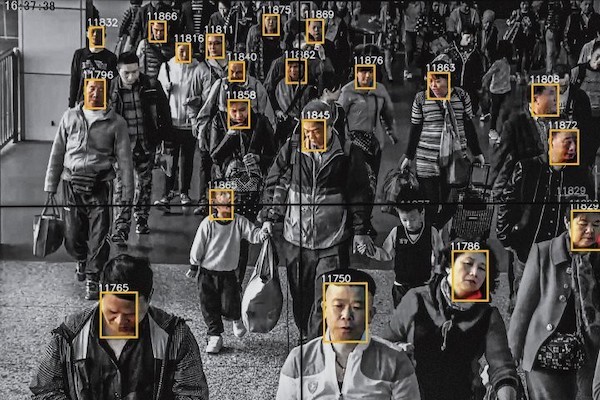
©The New Tork Times/ Redux. Gilles Sabrie
This relinquishment of control thus takes a specific form: in principle, retaining responsibility for our decisions while gradually losing influence over how they are made.
It is not an inevitable technological outcome. It depends on the practices we develop, but also on the actual opportunities for understanding and control that these tools afford us.
Going beyond one’s limits does not mean doing everything alone
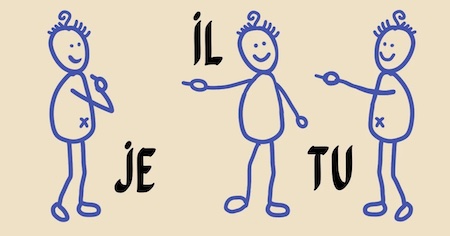
Preserving our autonomy, therefore, does not mean refusing assistance. It means giving it a role that is not limited to eliminating all effort.
We can ask AI for a counterargument rather than approval, multiple hypotheses rather than a single conclusion, and an explanation rather than a merely appealing formulation.
In short, we can ask it to be a training partner rather than a butler serving up our certainties.
These approaches do not guarantee the accuracy of the answers. However, they allow the exchange to become a process worth pursuing, rather than a result before which we must bow out. The time freed up can then be used to verify, explore further, and engage—not just to produce more.
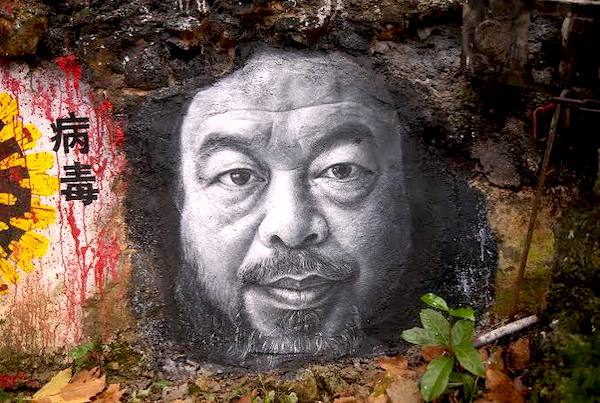
Peintre et sculpteur chinois aujourd’hui en exil
This requirement also applies to designers. Controlled delegation requires understandable permissions, visible actions, and effective ways to correct or interrupt.
It would be contradictory to promise greater autonomy with systems that are becoming increasingly difficult to understand or to regain control over. The ability to take back control must be real, not just a promise.
A tool serves us best when it expands our capabilities without making our participation unnecessary
Don’t Let Our Absence Be Noticed
We don’t have to choose between artificial intelligence and human thought. We have to decide on their relationship.
Let it help us explore possibilities, test our ideas, and break out of our routines. But let’s not mistake a recommendation for a direction, nor a convincing answer for a reason to live.
So the question isn’t just, “What can AI do for me?”—it becomes, “Does its help allow me to go where I wouldn’t have dared to go?” Let it help us open doors. As for the rest, let’s strive to be fully present as we walk through them.
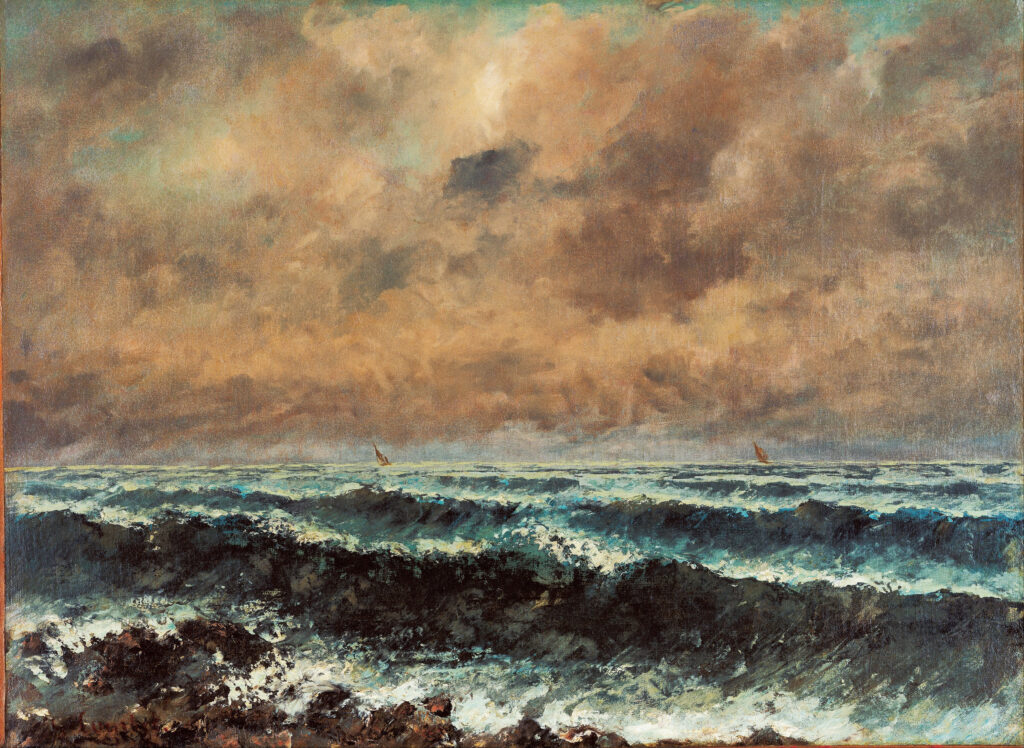
Huile sur toile. 54cm/73cm
Ohara Museum of Art, 大原美術館. Japon
You want to react to this article and contact us :
redaction@wukali.com
You can get the French version this article just clicking on the flag
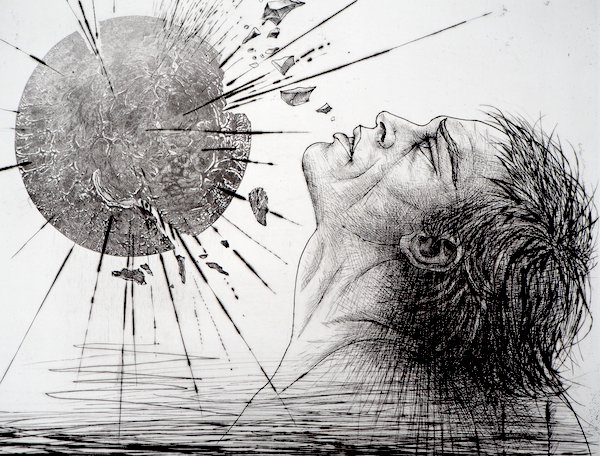
Illustration de l’entête: L’explosion solaire. Pierre-Yves Trémois (1921-2020). Gravure, 57.5 x 45 cm